
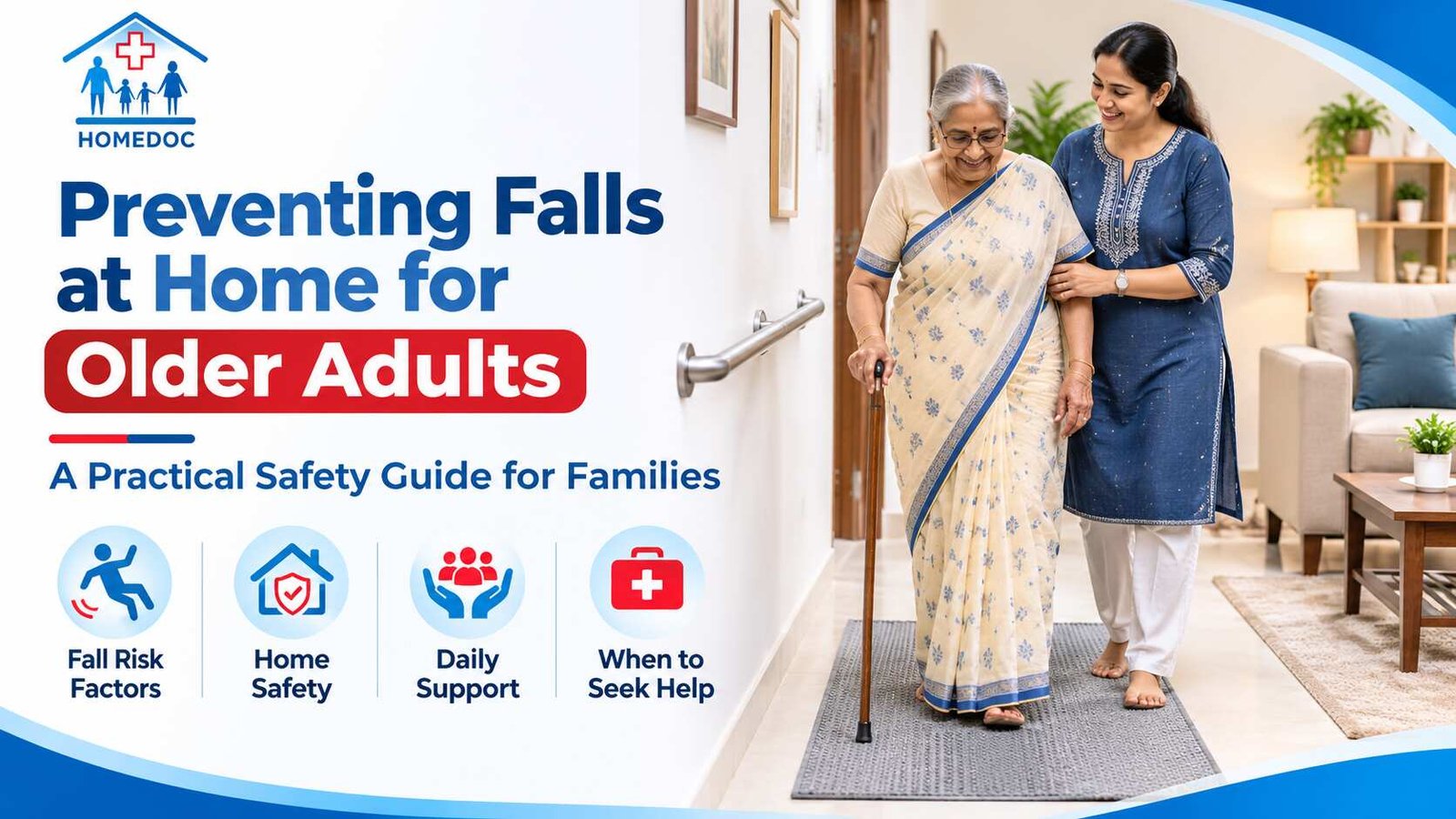
As people grow older, maintaining balance, mobility and independence can become more challenging. A simple slip or fall at home can sometimes lead to serious injuries, reduced confidence and difficulty performing everyday activities.
For senior citizens, falls are an important health and safety concern. Uneven flooring, poor lighting, loose carpets, medication side effects and muscle weakness can all increase the risk of falling.
The good news is that many household hazards can be identified and addressed through simple preventive measures.
Whether you are caring for an elderly parent or supporting a senior family member, understanding how to prevent falls at home can help create a safer and more comfortable living environment.
Why Are Older Adults More Prone to Falls?
Age-related physical changes can affect the way older adults walk, stand and maintain balance.
Some common factors that may increase fall risk include:
- Reduced muscle strength and flexibility.
- Poor balance and coordination.
- Changes in vision or hearing.
- Joint pain and mobility difficulties.
- Certain medical conditions.
- Side effects of medications.
- Previous falls or injuries.
- Difficulty walking on uneven surfaces.
Sometimes, multiple factors combine to increase the likelihood of a fall. This is why understanding an individual’s health and daily routine is important.
10 Common Fall Risks at Home and How to Prevent Them
1. Slippery Bathroom Floors
Bathrooms are among the areas where older adults may be at risk of slipping because of wet and smooth surfaces.
Prevention tips:
- Install non-slip mats inside and outside the shower area.
- Add grab bars near the toilet and shower.
- Keep bathroom floors dry.
- Ensure adequate lighting.
- Consider a shower chair if recommended.
2. Loose Carpets and Floor Mats
Loose rugs and unsecured mats can create tripping hazards.
Prevention tips:
- Remove unnecessary loose rugs.
- Secure essential carpets with appropriate non-slip backing.
- Keep walkways free from clutter.
- Avoid raised floor edges wherever possible.
3. Poor Lighting
Insufficient lighting can make it difficult to identify obstacles, especially during nighttime movement.
Prevention tips:
- Install bright lighting in hallways and staircases.
- Use night lights near bedrooms and bathrooms.
- Keep frequently used areas well-lit.
- Make sure switches are easily accessible.
4. Cluttered Walkways
Electrical wires, furniture and household objects can obstruct walking paths.
Prevention tips:
- Keep pathways clear.
- Secure loose electrical cables.
- Arrange furniture to provide sufficient walking space.
- Keep frequently used items within easy reach.
5. Unsafe Staircases
Stairs can become difficult to navigate when balance or leg strength is reduced.
Prevention tips:
- Install sturdy handrails.
- Ensure steps are well-lit.
- Avoid keeping objects on staircases.
- Use contrasting markings to improve visibility.
- Consider additional support if climbing stairs becomes difficult.
6. Incorrect Footwear
Loose slippers, worn-out footwear and slippery soles can increase the risk of losing balance.
Prevention tips:
- Choose comfortable footwear with non-slip soles.
- Avoid oversized slippers.
- Replace worn-out footwear.
- Avoid walking on slippery floors in socks.
7. Medication Side Effects
Some medicines can cause dizziness, drowsiness, low blood pressure or balance difficulties.
Prevention tips:
- Review medicines regularly with a doctor.
- Inform the healthcare professional about dizziness or unusual weakness.
- Never stop prescribed medication independently.
- Follow the prescribed medication schedule.
8. Poor Muscle Strength and Balance
Reduced strength in the legs and changes in balance can make everyday movements more difficult.
Prevention tips:
- Encourage appropriate physical activity.
- Consider supervised balance exercises.
- Follow physiotherapy recommendations.
- Avoid exercises that are unsuitable for the individual’s health condition.
9. Difficulty Getting Out of Bed or Chairs
Some older adults experience weakness or instability while standing up or sitting down.
Prevention tips:
- Use stable chairs with armrests.
- Avoid low or unstable furniture.
- Encourage slow position changes.
- Consider mobility support when recommended by a healthcare professional.
10. Lack of Supervision When Needed
Older adults with significant mobility difficulties may need assistance with certain daily activities.
Prevention tips:
- Arrange appropriate caregiver support.
- Keep emergency contact numbers accessible.
- Use mobility aids as advised.
- Ensure assistance is available during bathing, walking or other difficult activities when necessary.
Warning Signs That an Elderly Person May Be at Risk of Falling
Families should pay attention to changes in an older person’s mobility and behaviour.
Some important warning signs include:
- Frequent stumbling or losing balance.
- Holding furniture while walking.
- Difficulty getting up from a chair.
- Complaints of dizziness or weakness.
- Fear of walking without support.
- Recent history of falls.
- Reduced confidence in performing daily activities.
These symptoms should be discussed with a healthcare professional to identify possible underlying causes and appropriate preventive measures.
What Should You Do If an Elderly Person Falls?
Knowing what to do after a fall is important for family members and caregivers.
1. Stay Calm
Avoid panicking or immediately trying to lift the person.
2. Check for Injuries
Look for visible injuries, bleeding, swelling or complaints of pain.
3. Avoid Unnecessary Movement
If the person has severe pain, a suspected head, neck, back or hip injury, or cannot get up safely, avoid moving them unnecessarily.
4. Seek Medical Assistance
Call emergency services if the person is unconscious, has difficulty breathing, experiences severe pain, has significant bleeding or shows signs of a serious injury.
A head injury requires particular attention, especially if the person takes blood-thinning medication.
5. Arrange Medical Evaluation
Even when an injury does not appear serious, a healthcare professional may need to assess the person and identify why the fall occurred.
How Can Professional Elderly Care at Home Help?
Managing an elderly family member’s health and daily activities can be challenging, particularly when family members have professional or personal responsibilities.
Professional home healthcare support can help families manage certain care requirements while allowing older adults to remain in a familiar environment.
Depending on the individual’s needs, support may include:
Doctor Visits at Home
Regular medical assessments can help monitor health concerns, review medications and evaluate changes in mobility or balance.
Learn more about doctor home visit services by HOMEDOC.
Nursing Care at Home
Trained nursing professionals can assist with prescribed nursing procedures, patient monitoring and specific healthcare needs.
Elderly Care and Attendant Support
Appropriate caregiver assistance can help older adults with daily activities, mobility and personal care, depending on their individual requirements.
Physiotherapy at Home
A qualified physiotherapist may recommend suitable exercises to improve strength, mobility and balance when clinically appropriate.
Regular Health Monitoring
Monitoring existing health conditions and attending follow-up consultations can help families stay informed about an elderly person’s changing healthcare needs.
Explore HOMEDOC’s healthcare services to understand the available home-based support options.
Daily Fall Prevention Checklist for Families
Use this simple checklist to make your home safer for older family members:
- Keep floors dry and walkways clear.
- Remove loose rugs and unnecessary obstacles.
- Install grab bars in suitable areas.
- Ensure proper lighting throughout the house.
- Keep frequently used items within reach.
- Choose safe and comfortable footwear.
- Review medications with a healthcare professional.
- Encourage appropriate physical activity.
- Arrange regular health assessments.
- Ensure assistance is available when needed.
Small improvements in the home environment can make everyday movement safer and more comfortable.
Frequently Asked Questions About Fall Prevention in Older Adults
1. Why do elderly people fall frequently?
Falls can occur due to reduced muscle strength, balance problems, vision changes, medication side effects, chronic medical conditions and household hazards.
2. How can I make my home safer for senior citizens?
Install grab bars, improve lighting, remove loose rugs, keep walkways clear and use non-slip bathroom mats. A professional home safety assessment may also help identify individual risks.
3. Are falls a normal part of ageing?
No. Although the risk of falling can increase with age, falls should not be considered an unavoidable part of ageing. Preventive measures and medical assessment can help reduce risk.
4. Can physiotherapy help prevent falls in older adults?
Appropriately designed physiotherapy and balance exercises may improve strength, mobility and stability in suitable individuals. Exercises should be selected according to the person’s health and physical abilities.
5. When should an elderly person see a doctor after a fall?
Medical evaluation is important after a fall, particularly if there is pain, swelling, difficulty walking, dizziness or a head injury. Serious symptoms require emergency medical attention.
6. Can elderly patients receive healthcare at home?
Yes. Depending on the patient’s needs and clinical condition, home healthcare may include doctor visits, nursing care, elderly care support and physiotherapy.
Conclusion
Preventing falls at home is an important part of supporting the safety, confidence and independence of older adults.
From improving bathroom safety and lighting to arranging appropriate medical assessments and caregiver assistance, small preventive steps can make a meaningful difference.
Every senior citizen has different health and mobility requirements. Therefore, fall prevention should be based on individual risk factors and professional medical guidance.
At HOMEDOC, families can explore home-based healthcare support, including doctor visits, elderly care, nursing assistance and physiotherapy.


