
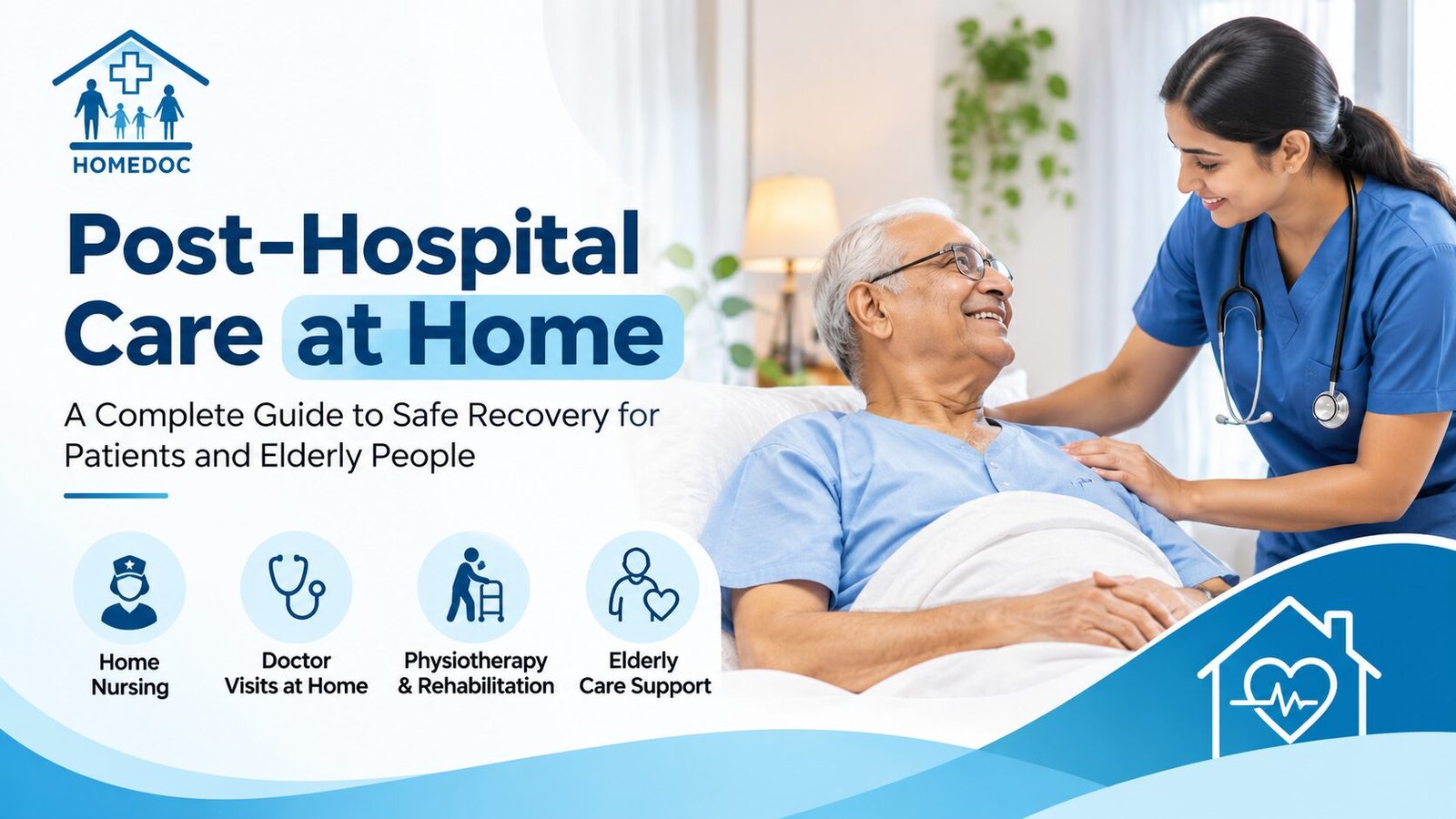
Recovering after a hospital stay can be challenging, especially for elderly individuals, patients who have undergone surgery, and those managing long-term medical conditions. Although hospital treatment addresses the immediate medical concern, proper care and monitoring after discharge are equally important for a smooth recovery.
For many families, arranging professional post-hospital care at home in Gurgaon is a practical way to ensure that their loved ones receive the attention, assistance, and medical support they need.
With professional home healthcare services, patients can continue their recovery in a familiar environment while receiving appropriate assistance from trained caregivers, nurses, and qualified doctors.
In this guide, we will explore the importance of post-hospital care, the services patients may require, and how families can prepare their homes for a safer recovery.
What Is Post-Hospital Care at Home?
Post-hospital care refers to the medical and personal assistance provided to patients after they are discharged from a hospital.
Depending on the patient’s condition, recovery may involve:
- Regular health monitoring and doctor consultations.
- Medication management and timely administration.
- Wound dressing and post-surgical care.
- Nursing assistance and personal hygiene support.
- Physiotherapy and mobility assistance.
- Assistance with everyday activities.
- Follow-up consultations and medical assessments.
The type and duration of care depend on the patient’s medical condition and the recommendations of their treating doctor.
For patients who are medically stable but still require assistance, home healthcare can provide a comfortable alternative to repeated hospital visits.
Why Is Professional Home Care Important After Hospital Discharge?
Discharge from a hospital does not necessarily mean that a patient has completely recovered. Some individuals may continue experiencing weakness, limited mobility, discomfort, or difficulty performing everyday activities.
Professional home care can help address these challenges.
1. Continuous Monitoring of Health
Patients recovering from surgery, infections, or chronic illnesses may require regular monitoring of their health.
Depending on the medical instructions, healthcare professionals may monitor:
- Blood pressure.
- Blood glucose levels.
- Body temperature.
- Pulse rate.
- Oxygen saturation.
Regular monitoring can help caregivers identify changes that require medical attention.
2. Proper Medication Management
After hospitalization, patients may receive new prescriptions or changes to their existing medicines.
Missing doses, taking incorrect quantities, or restarting discontinued medicines without medical advice can create complications.
A trained caregiver or nurse can assist with medication schedules according to the prescribed treatment plan.
3. Assistance with Daily Activities
Some patients may temporarily struggle with walking, bathing, dressing, eating, or using the washroom.
Professional attendants can provide personal care assistance while maintaining the patient’s dignity and independence.
4. Reduced Stress for Family Members
Looking after a recovering family member while managing professional and personal responsibilities can become overwhelming.
Having trained healthcare support at home allows family members to focus on emotional support while trained professionals assist with appropriate care requirements.
5. Comfortable Recovery Environment
Recovering at home allows patients to remain in familiar surroundings, stay close to their families, and follow a personalized care routine.
However, home recovery should always be based on medical suitability and the treating doctor’s recommendations.
Types of Post-Hospital Care Services Patients May Need
Every patient has different recovery requirements. Some may need occasional nursing assistance, while others may require continuous supervision.
Here are some commonly required home healthcare services.
1. Home Nursing Services
Patients who require clinical assistance after discharge may benefit from professional nursing support.
Home nursing services may include:
- Dressing changes as prescribed.
- Catheter care.
- Injection administration when prescribed.
- Monitoring vital signs.
- Assistance with prescribed medical procedures.
- Basic patient care and observation.
Nursing procedures should only be performed by appropriately qualified healthcare professionals.
2. Elderly Patient Care at Home
Senior citizens may require additional attention after hospitalization because of age-related mobility limitations, weakness, or existing medical conditions.
Professional elderly care may include:
- Assistance with daily activities.
- Mobility and walking support.
- Personal hygiene assistance.
- Medication schedule assistance.
- Regular health monitoring.
- Companionship and emotional support.
The objective is to help elderly individuals maintain comfort, safety, and independence wherever possible.
3. Physiotherapy and Rehabilitation at Home
Patients recovering from fractures, joint replacement surgery, strokes, or other medical conditions may require rehabilitation.
A qualified physiotherapist can assess the patient’s condition and recommend suitable exercises.
Home physiotherapy may help patients work towards:
- Improving mobility.
- Building muscle strength.
- Improving balance and coordination.
- Regaining functional independence.
- Supporting rehabilitation goals.
Exercises should always be performed according to an individualized rehabilitation plan.
4. Doctor Consultations at Home
Some patients may find travelling to a hospital or clinic difficult during recovery.
A doctor home visit can help with follow-up assessments, symptom evaluation, and reviewing the patient’s progress.
Doctors can also determine whether additional investigations, specialist consultations, or hospital evaluation are required.
5. Medical Equipment and Diagnostic Support
Depending on the patient’s condition, certain medical equipment may be required during home recovery.
Examples include:
- Hospital beds.
- Wheelchairs.
- Oxygen equipment when prescribed.
- Patient monitoring devices.
- Mobility support equipment.
Home sample collection and diagnostic services may also be useful when recommended by the treating doctor.
How to Prepare Your Home Before a Patient Returns from Hospital
Preparing the home environment before discharge can make recovery more manageable.
Here are some practical steps families should consider.
1. Prepare a Comfortable Recovery Space
Arrange a clean, well-ventilated room with easy access to essential items. If possible, choose a room with convenient access to the bathroom.
2. Reduce the Risk of Falls
Remove loose carpets, electrical wires, and unnecessary furniture from walking areas. Install grab bars or other support equipment when recommended.
3. Organise Medicines Properly
Keep prescribed medicines in a designated location. Maintain a written medication schedule and follow the doctor’s instructions.
4. Arrange Necessary Medical Equipment
Check whether the patient requires a hospital bed, wheelchair, walking aid, or any other equipment before arriving home.
5. Keep Emergency Contacts Accessible
Maintain contact details of the treating doctor, hospital, caregiver, and emergency medical services in an easily accessible location.
6. Arrange Professional Assistance When Required
If the patient requires clinical procedures, regular monitoring, or mobility assistance, arrange appropriately trained healthcare support before discharge.
Who Needs Post-Hospital Care at Home?
Post-hospital care can be beneficial for different categories of patients, depending on their medical needs.
Elderly Patients
Older adults may require additional support after hospitalization, particularly when they experience weakness, reduced mobility, or chronic health conditions.
Patients Recovering from Surgery
Individuals recovering from orthopaedic, abdominal, cardiac, or other surgeries may need wound care, mobility assistance, and follow-up assessments.
Bedridden Patients
Patients who cannot move independently may require assistance with hygiene, repositioning, feeding, and other daily activities.
Patients with Chronic Medical Conditions
Individuals living with diabetes, hypertension, respiratory conditions, or other chronic illnesses may require continued monitoring and medical follow-ups.
Patients Recovering After Critical Illness
Some patients discharged after intensive care may continue to experience physical weakness and require a structured recovery plan.
The treating medical team should determine the appropriate level of home care before discharge.
How to Choose the Right Home Healthcare Service in Gurgaon?
Selecting a suitable home healthcare provider is an important decision for families.
Before choosing a service, consider the following factors:
Qualified Healthcare Professionals: Check the qualifications, experience, and relevant registration of doctors, nurses, and other healthcare professionals.
Personalised Care Plans: Healthcare requirements should be based on the patient’s medical condition and discharge instructions.
Transparent Communication: The provider should explain the services, responsibilities, availability, and associated costs clearly.
Follow-Up Support: Ask how changes in the patient’s condition will be communicated to the treating doctor.
Patient Safety and Hygiene: Ensure that proper hygiene, infection prevention, and patient safety practices are followed.
Availability of Different Services: Depending on your requirements, access to doctors, nursing staff, physiotherapists, and trained attendants can make care coordination easier.
Why Choose HOMEDOC for Home Healthcare Services?
HOMEDOC aims to make quality healthcare more accessible by bringing medical assistance and elderly care to patients’ homes.
With its focus on Trust, Empathy, Care, and Honesty, HOMEDOC supports families looking for convenient healthcare assistance across Gurgaon, Delhi NCR, and Chandigarh.
Its range of services includes:
- Doctor consultations at home.
- Elderly and bedridden patient care.
- Home nursing services.
- Trained attendants.
- Physiotherapy at home.
- Home blood sample collection through an NABL-accredited laboratory.
- Medical equipment rental and purchase.
- Medical and pharmacy support.
Whether a family needs assistance with elderly care, nursing support, or a doctor consultation at home, HOMEDOC aims to provide convenient healthcare solutions according to individual requirements.
When Should You Seek Immediate Medical Attention?
Home care is not a substitute for emergency hospital treatment.
Contact emergency medical services immediately if a patient experiences:
- Severe chest pain or pressure.
- Sudden difficulty breathing.
- Sudden weakness or numbness, particularly on one side.
- Sudden confusion or loss of consciousness.
- Uncontrolled bleeding.
- Severe allergic reactions.
- Any rapidly worsening or life-threatening symptoms.
In India, call 112 for emergency assistance when required. Do not delay emergency treatment while waiting for a home visit.
Frequently Asked Questions (FAQs)
1. What is post-hospital care at home?
Post-hospital care at home involves medical and personal assistance provided to patients after hospital discharge. It may include nursing, medication assistance, health monitoring, physiotherapy, and daily activity support.
2. Is home nursing necessary after surgery?
Not every patient requires home nursing after surgery. However, patients who need wound dressing, clinical monitoring, catheter care, or other nursing procedures may benefit from professional nursing assistance.
3. How long does a patient need home care after hospital discharge?
The duration depends on the patient’s medical condition, recovery progress, and doctor’s recommendations. Some patients need assistance for a few days, while others may require longer-term support.
4. Can elderly patients receive medical care at home in Gurgaon?
Yes. Depending on their medical needs, elderly patients can receive doctor consultations, nursing assistance, physiotherapy, and trained attendant support at home.
5. Can physiotherapy be provided at home after surgery?
Yes. Qualified physiotherapists can provide home-based rehabilitation when recommended by the treating doctor. The exercises and frequency depend on the patient’s condition and recovery goals.
6. How can I arrange post-hospital care services in Gurgaon?
You can contact HOMEDOC to discuss the patient’s condition, care requirements, and availability of suitable home healthcare services.
Conclusion
Recovery does not end when a patient leaves the hospital. Proper medical guidance, regular monitoring, appropriate nursing assistance, and emotional support can all contribute to a better recovery experience.
For families managing the healthcare needs of elderly individuals, post-surgical patients, or those recovering from serious illnesses, professional post-hospital care at home in Gurgaon can make everyday care more organised and manageable.
HOMEDOC aims to bring compassionate healthcare closer to families through doctor consultations, elderly care, nursing assistance, and other home healthcare services.


